


此页面上的某些内容不提供英文版本,默认显示为当前可用的语言。
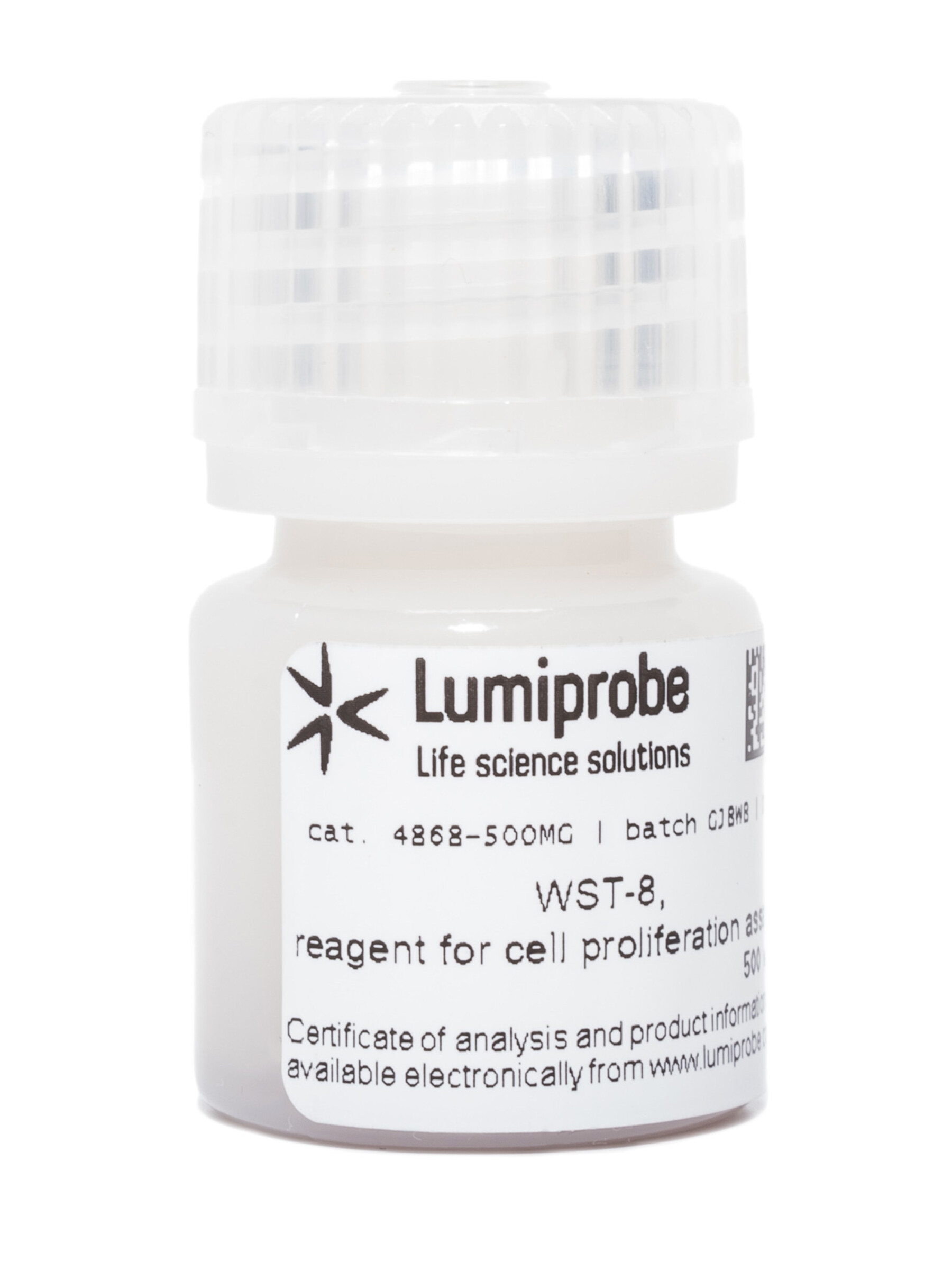
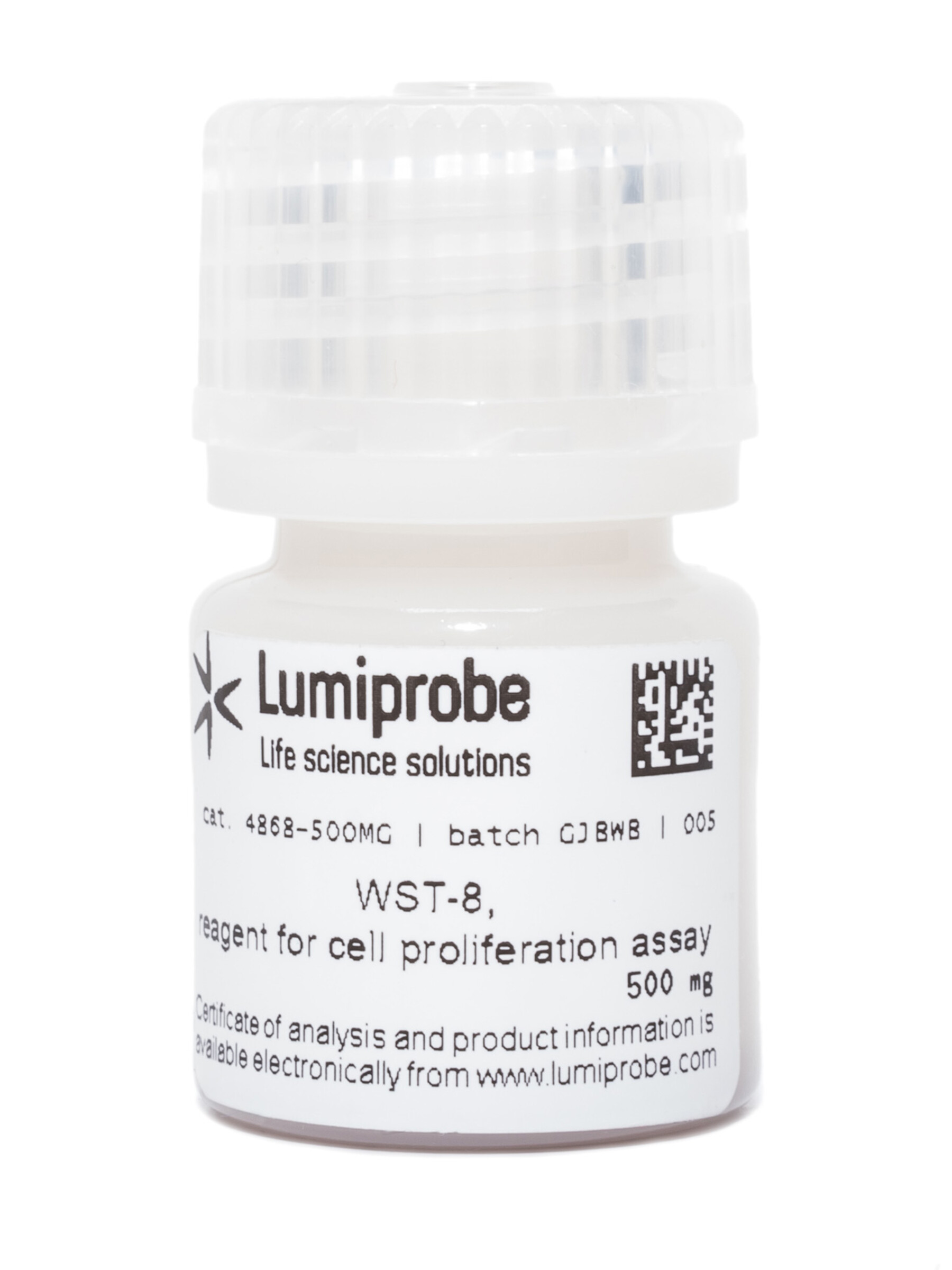
WST-8, reagent for cell proliferation assay
| 目录号 | 数量 | 价格 | 提前通知时间 | 购买此产品 |
|---|---|---|---|---|
| 4868-10mg | 10 mg |
–
|
现货 | |
| 4868-100mg | 100 mg |
$155.00
|
现货 | |
| 4868-500mg | 500 mg |
$789.90

|
现货 |


WST-8 (Water-Soluble Tetrazolium 8) is a water-soluble tetrazolium salt widely used to assess the metabolic activity of cells. The dye does not penetrate living cells but can be reduced outside the cells by NADPH-dependent cellular oxidoreductases to water-soluble formazan. The reaction occurs by electron transfer across the plasma membrane in a neutral pH and the presence of an intermediate electron acceptor, 1-methoxyphenazine methosulfate. The staining intensity is proportional to the number of viable cells. The maximum absorption of the reaction product is 450–500 nm.
The use of WST-8 has several advantages:
- Unlike MTT, working with WST-8 does not require dissolving formazan crystals, simplifying the protocol, and eliminating the use of toxic solvents (e.g., DMSO).
- Cell analysis using WST-8 is a one-step method. The reagent is added directly to the culture medium, and the results are read without additional processing.
- WST-8 is non-toxic to cells, which allows for long incubations (up to 24 hours) without the risk of artifacts.
- High sensitivity of the method. A wide dynamic range ensures accuracy even at low cell density.
- The method is compatible with adherent and suspension cultures and various types of spectrophotometric measurement plates.

顾客还购买了这个产品

LUCS 13 is a cell-permeant green fluorescent nucleic acid stain that exhibits bright, gree…

水介质中铜催化点击反应的催化剂。一种稳定的铜 (II) 与 BTTAA 络合物,必须使用还原剂将其转化为铜 (I)。该复合物可用于制备任意组成的反应缓冲液。
…

A reagent for detecting reactive oxygen species (ROS) in living cells. This carboxylated H…
一种稳定的水溶性电子传递介质,用于涉及NAD(P)H依赖型脱氢酶的生化分析。
…

FCCP 是线粒体氧化磷酸化的强解偶联剂,可通过跨细胞膜运输质子来破坏 ATP 的产生。
…

Orange-red fluorescent lipophilic dye for membrane labeling and cell tracking. Unlike othe…

无毒、细胞渗透性绿色荧光染料,用于活细胞的标记和长期示踪。
…

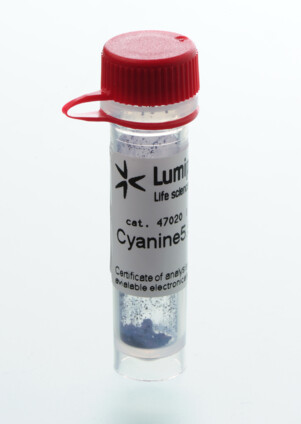
Cyanine5.5 NHS 是一种远红/近红外胺反应性染料。
…

用于选择性标记活细胞内质网 (ER) 的红色荧光染色剂。
…

Rhodamine 123 is a cell-permeant, green-fluorescent dye that stains mitochondria in living…
General properties
| Appearance: | brick solid |
| Molecular weight: | 600.47 |
| CAS number: | 193149-74-5 |
| Molecular formula: | C20H14N6NaO11S2 |
| IUPAC name: | 2-(2-Methoxy-4-nitropenyl)-3-(4-nitropenyl)-5-(2,4-disulfophenyl)-2H-tetrazolium, sodium salt |
| Solubility: | water, DMSO |
| Quality control: | NMR 1H and HPLC-MS (95+%) |
| Storage conditions: | 24 months after receival at -20°C in the dark. Transportation: at room temperature for up to 3 weeks. Desiccate. |
| 安全数据表(MSDS): | 下载 |
| 产品规格 |
Spectral properties
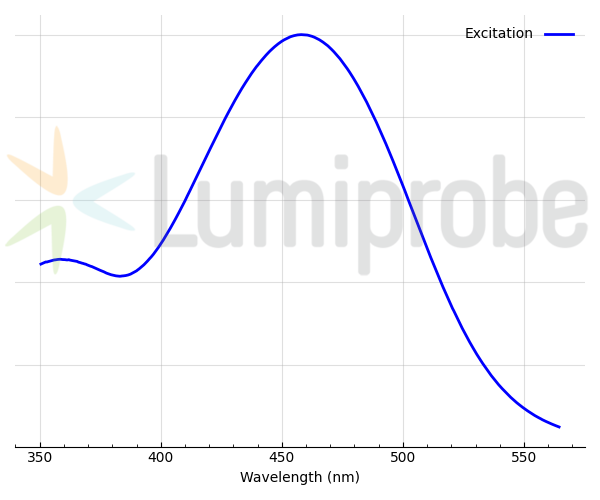
| Excitation/absorption maximum, nm: | 458 |
This Product is offered and sold for research purposes only. It has not been tested for safety and efficacy in food, drug, medical device, cosmetic, commercial or any other use. Supply does not express or imply authorization to use for any other purpose, including, without limitation, in vitro diagnostic purposes, in the manufacture of food or pharmaceutical products, in medical devices or in cosmetic products.

短链接 - cn.lumiprobe.com/sh/p/eN

商品数量不正确.

 您的购物车是空的

 $
$